
// Enterprise SaaS
Self-Service User Access Management
Self-service RBAC management for TrusTrace — a supply chain transparency SaaS used by enterprise clients including Tapestry and Lululemon. The existing system forced brand admins to raise support tickets for any permission change. This project redesigned the entire access management experience: self-service user group creation, granular module-level permissions, division-based access scoping, and streamlined user lifecycle management — all within a subscription-aware, enterprise-grade permission model.
Role
UX Designer (End-to-end)
Duration
Multi-sprint
Team
PM, Engineering Lead, Backend Developers, QA
// Challenges
- >TT Admins could only create user groups and associate users — any granular permission change required a TrusTrace support ticket
- >Supplier-side users had no ability to create read-only user groups independently
- >No module-level access control — suppliers using only certain modules still had blanket platform access
- >User onboarding relied on manual Excel sheet uploads, creating friction and errors
- >No division-based scoping to organise users by geography or business unit
// Solutions
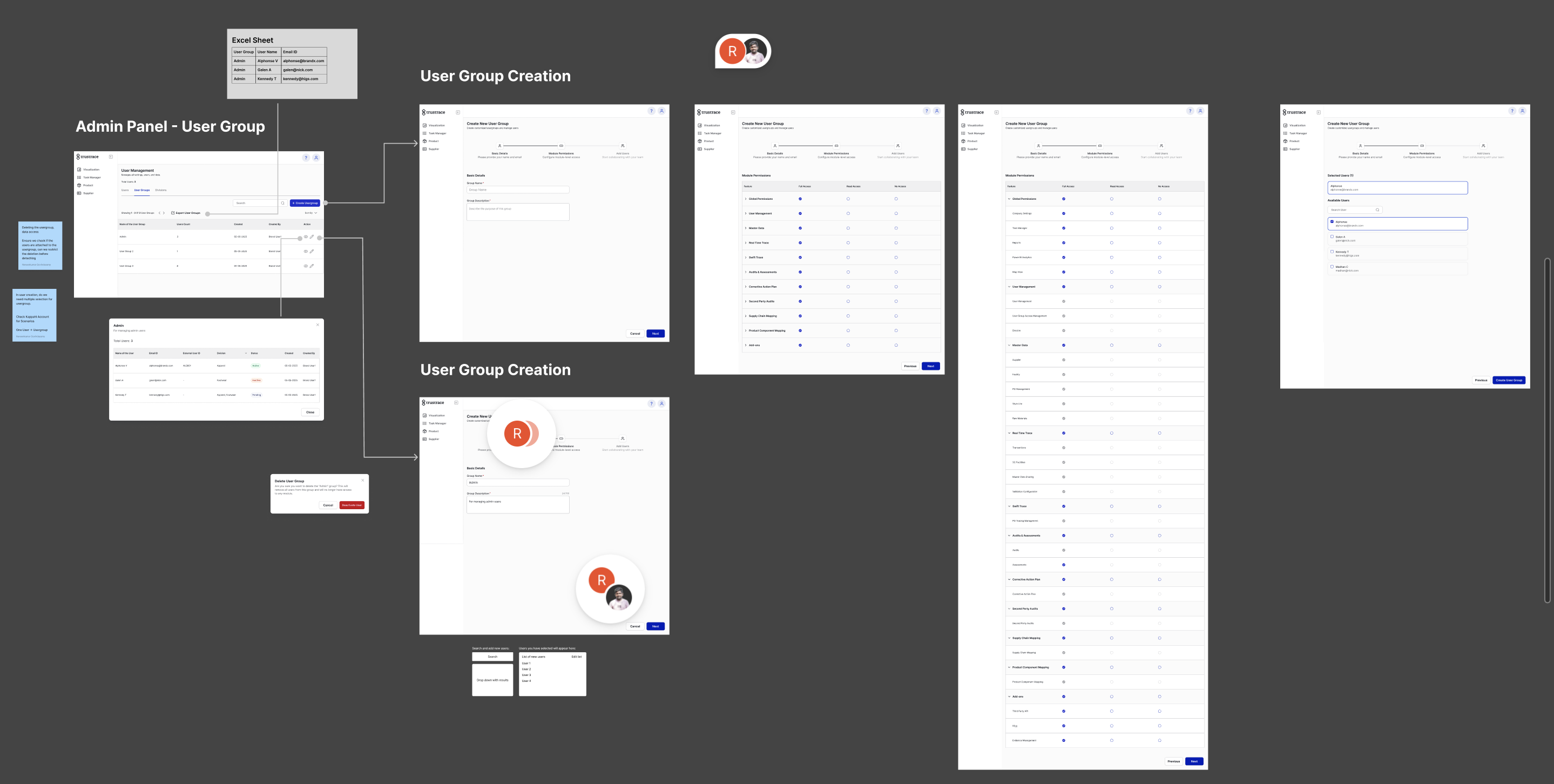
- >Designed a 3-step wizard for user group creation: Group Name → Module Permissions (Full/Read/No Access matrix) → User Assignment
- >Built a subscription-aware permission model — available module permissions are scoped to what each brand subscribes to
- >Introduced Division Management with batch-creation and DAC (Division Access Control) for organisational scoping
- >Replaced Excel bulk uploads with in-platform user creation including duplicate detection, status management, and export
- >Added safety modals for destructive actions and block modals for constraint violations to build admin confidence
// Process
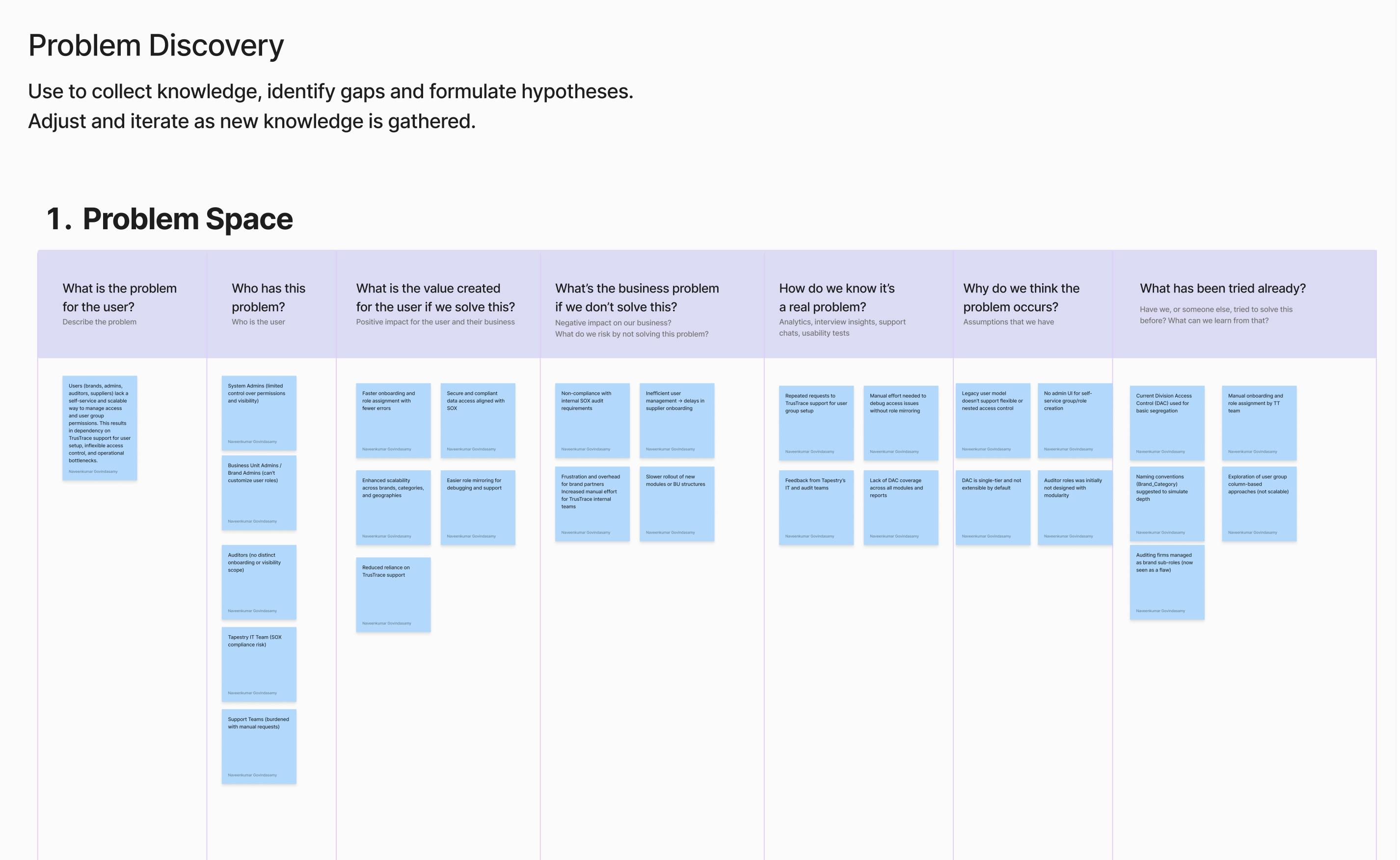
Problem Discovery
Mapped DAC hierarchy (System Admin → Parent Brand → Child Companies → Suppliers), stakeholder interviews, admin panel audit, support ticket analysis
Problem Alignment
Internal workshop to confirm scope — self-service user groups, module permissions, user lifecycle, and divisions for this release
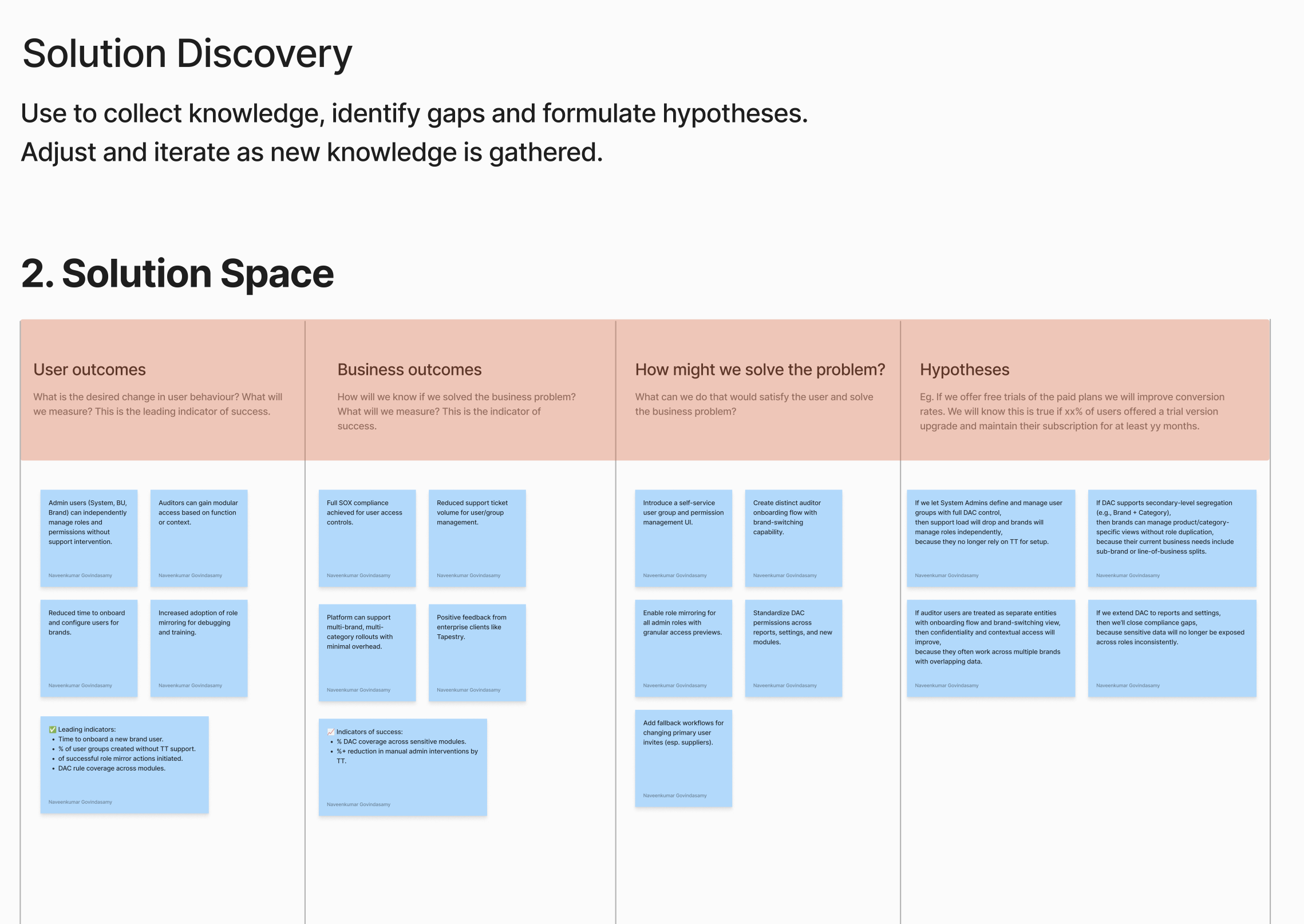
Solution Discovery
Lo-fi prototypes across 2 iterations, establishing the 3-step wizard pattern, radio-button permission matrix, and division batch creation
Solution Alignment
Design review workshop, final handoff with complete user journey maps, state definitions, error handling, and edge case documentation
// Key Decision
Design one permission system flexible enough for complex multi-tier organisational hierarchies (parent company → child brands → suppliers) without overwhelming admins
Adopted a 3-tier subscription-aware permission model with progressive disclosure — a 3-step wizard breaks the complex configuration task into manageable steps, with safety modals preventing harmful mistakes
Self-service RBAC covering user lifecycle, module-level permissions, and division scoping — enterprise clients at Tapestry and Lululemon can now manage access independently
// Outcomes
Reduced reliance on TrusTrace support for routine access management
Brand admins at Tapestry and Lululemon gained full self-service capabilities
Granular, auditable permission controls aligned to enterprise organisational hierarchies
In-platform user onboarding replaced friction-heavy Excel upload process
// Screens & Design
Final design — User Groups, Module Permissions, User Assignments, Divisions
User Management dashboard with lifecycle controls
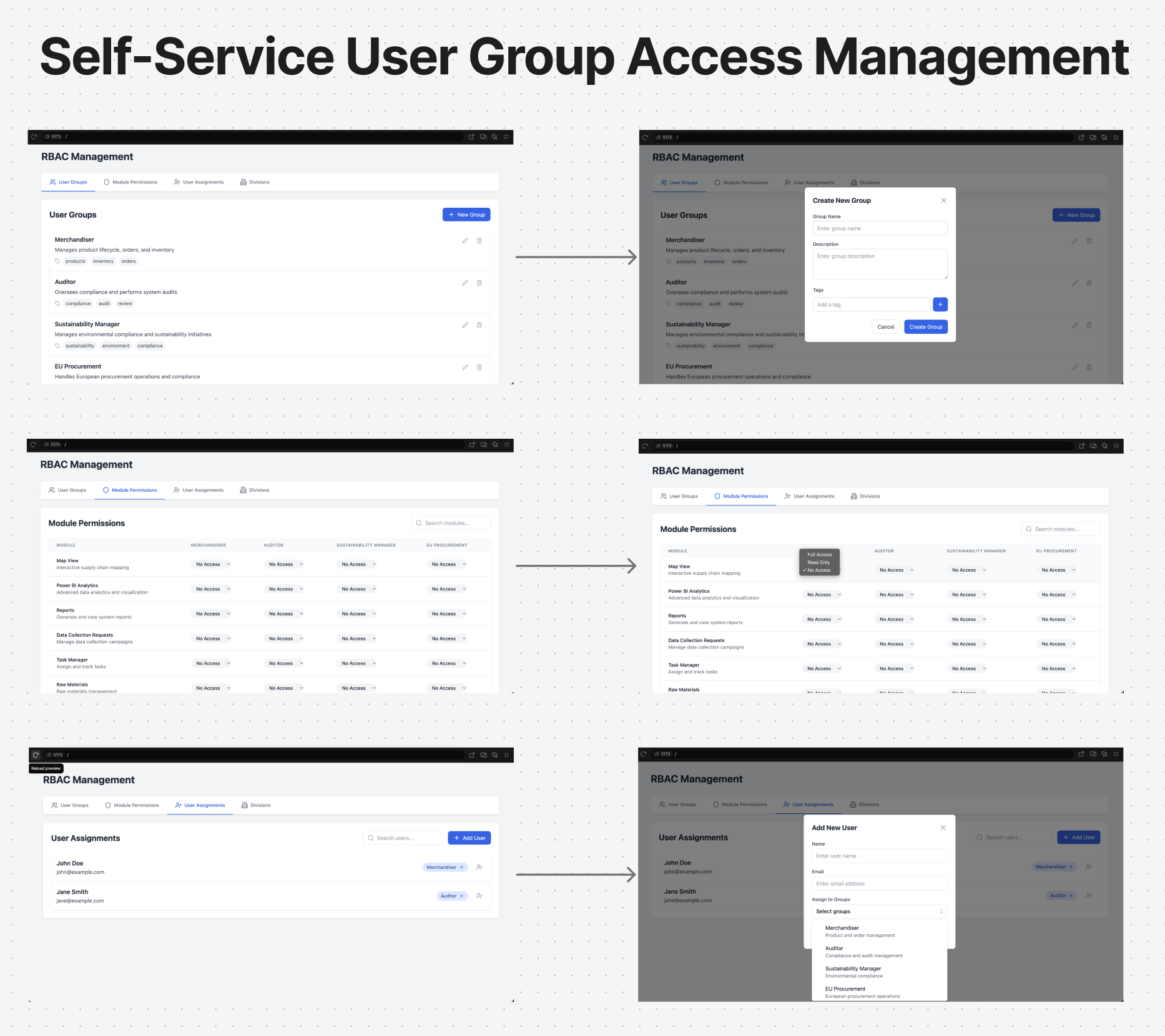
Iteration 1 — Quick prototype for stakeholder discussion
Module permissions matrix and user group creation wizard
// Reflection
Enterprise hierarchies demand flexible permission models. Designing for the DAC structure — parent companies with multiple child brands and delegated admin roles — taught me that subscription-aware design prevents configuration errors before they happen. The biggest insight: progressive disclosure through wizards reduces cognitive load, while safety modals give admins the confidence to manage permissions independently without fear of breaking something.